
track tractor parts compatibility
Knowing how to track tractor parts compatibility is essential for anyone who wants to maintain, repair, or upgrade their tractor efficiently. Whether you manage a large fleet or own a single machine, compatibility ensures that every component fits and functions correctly. Improperly matched Tractor parts can lead to performance issues, safety risks, and costly breakdowns. For farmers, mechanics, and equipment owners, learning the right methods to track compatibility helps avoid mistakes, save money, and keep equipment running smoothly.
The most important step in understanding how to track tractor parts compatibility is identifying the exact model and serial number of your tractor. Every machine, even those from the same brand, may have differences in design depending on the year of manufacture, production batch, or updates introduced by the manufacturer. These details help determine which Tractor parts are specifically engineered to fit your machine. Serial numbers and model identifiers are usually found on metal plates attached to the tractor chassis or engine. Keeping these numbers accessible makes it easier to match the correct parts both online and in physical stores.
Another essential method for tracking compatibility is using the manufacturer’s parts catalog. Most tractor brands provide detailed manuals—either digital or printed—that list every component by part number, description, and diagram. These catalogs act as the most reliable reference for ensuring the Tractor parts you purchase are the right ones. The diagrams help users visualize where each part fits, while the part numbers allow accurate comparisons when browsing aftermarket or refurbished options. Many manufacturers also provide online databases where you can enter your tractor model and receive a complete list of compatible parts.
Cross-reference tools are extremely useful when determining how to track tractor parts compatibility. These tools allow you to compare OEM (Original Equipment Manufacturer) part numbers with aftermarket equivalents. Because multiple manufacturers produce compatible components, cross-reference systems help identify alternatives that match the specifications of the original part. This is especially valuable when the OEM part is discontinued or out of stock. Cross-referencing ensures that replacement Tractor parts will work properly even if they are not identical to the original.
Working closely with trusted suppliers is another practical way to track compatibility. Experienced dealers and parts distributors possess extensive knowledge of many tractor models. They can quickly identify which Tractor parts match your machine and warn you about components that are often confused or mislabeled. Good suppliers also maintain updated databases that reflect manufacturer changes and part number revisions over time. This professional support minimizes the chances of purchasing incompatible parts and provides a reliable resource when facing uncertainty.
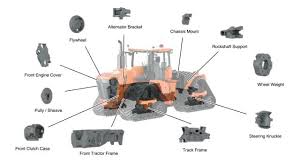
How do I track tractor parts compatibility?
Online marketplaces and parts platforms often include compatibility filters that simplify your search. These tools allow you to enter your tractor’s brand, model, and year, and then display only the Tractor parts that are designed to fit your machine. While convenient, it is still important to verify part numbers manually because some listings can be inaccurate. Reading product descriptions carefully and checking customer reviews helps confirm whether others have successfully used the same part with similar tractor models.
Knowledge of part categories is also helpful when learning how to track tractor parts compatibility. Some parts—such as filters, belts, or spark plugs—are designed with universal measurements that fit many brands. Other components, especially engine parts, electrical components, and hydraulic fittings, are model-specific and require precise matching. Understanding which categories allow flexibility and which demand exact specifications helps avoid compatibility issues. Whenever dealing with complex or essential Tractor parts like gearboxes, injectors, pumps, or clutches, it is safest to rely on exact OEM numbers.
Maintenance records play a surprisingly important role in compatibility tracking. Over the years, tractors may undergo upgrades, retrofits, or replacements using non-original parts. Keeping detailed records of these changes helps ensure future replacements are compatible with the updated configuration. For example, if a hydraulic pump was replaced with an aftermarket alternative, the hoses, seals, and fittings required for future repairs may differ from the original setup. These records make it easier to identify the correct Tractor parts without confusion.
Consulting online forums, farming communities, and social media groups can also provide valuable insights. Many experienced owners share information about which parts fit specific models, common compatibility issues, and recommended brands. These communities can help answer questions like how to track tractor parts compatibility for older or rare tractors, where official documentation may be limited. Real-world experiences from other users serve as practical guidance that complements manufacturer specifications.
Testing and verification are important before final installation. When a new part arrives, comparing it physically with the old part—checking size, shape, mounting points, and connectors—helps confirm compatibility. This simple step prevents installation problems and avoids potential damage to Tractor parts that may not align correctly.
In conclusion, understanding how to track tractor parts compatibility involves using model information, manufacturer catalogs, cross-reference tools, reliable suppliers, online filters, maintenance records, and real-world advice. By combining these methods, equipment owners can ensure that every replacement part fits correctly and performs as expected. Tracking compatibility effectively protects your investment, improves tractor performance, and ensures long-term reliability of Tractor parts.
